
SBA financing: Programs, fit, and preparation
Compare SBA 7(a), 504, and microloan financing. Review eligible uses, ownership requirements, guarantees, and the preparation a lender may require.
The short answer
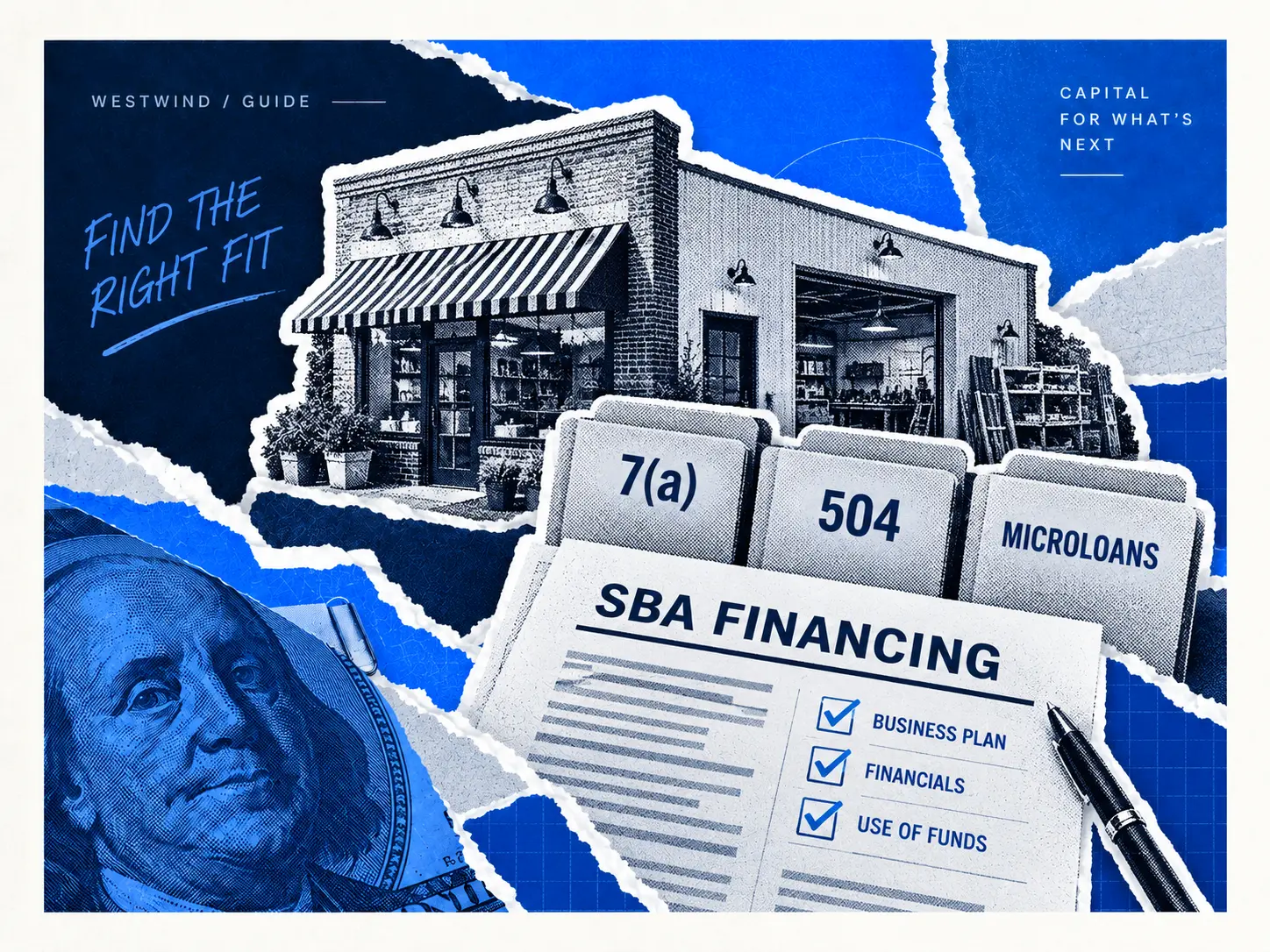
SBA financing includes several programs designed to support eligible US small businesses through participating lenders and intermediaries. For most borrowers comparing these options, the starting point is the use of funds: 7(a) for a broad range of eligible business purposes, 504 for qualifying major fixed assets, and microloans for smaller needs. Each has its own rules and credit process.
Key takeaways
- Compare 7(a), 504, and microloan programs by the use of funds and transaction structure.
- Confirm current ownership eligibility and program rules with the participating provider.
- SBA backing does not remove repayment duties, guarantees, or underwriting requirements.
The business context
An SBA backing does not make funding automatic or remove the borrower's repayment obligation. This guide covers the main business financing programs, not disaster assistance. Program details below were checked against SBA sources on October 9, 2026.
Compare the main SBA financing programs
| Program | Main use to investigate | Published program amount |
|---|---|---|
| 7(a) | Eligible working capital, equipment, property, acquisitions, or refinancing | Up to $5 million per loan, subject to program rules |
| 504 | Eligible major fixed assets through a CDC and lending structure | SBA 504 portion can reach $5.5 million for eligible projects |
| Microloan | Smaller eligible working capital, inventory, supplies, or equipment needs | Up to $50,000 through an intermediary |
The amounts are program ceilings, not indications of what your business qualifies for. A 504 project's total financing can exceed the SBA backed portion because the structure also involves other financing and borrower contribution. Confirm the current limit and structure for the specific project.[1], [2], [3]
SBA also announced a policy in July 2026 allowing qualifying borrowers that obtain 7(a) financing first to combine up to $5 million in 7(a) financing and $5 million in 504 financing. That is a conditional combined program arrangement, not a new $10 million single 7(a) loan.[7]
Decide which program matches the use of funds
A business seeking working capital or a mixed purpose transaction may start by evaluating 7(a). A business acquiring eligible premises or long lived production assets may investigate 504. A smaller request may fit an intermediary's microloan program.
The exclusions matter. SBA states that 504 proceeds cannot fund ordinary working capital or inventory, and that permitted refinancing must meet the applicable qualified debt rules. Microloan proceeds cannot pay existing debt or purchase real estate.[2], [3]
Separate mixed uses before approaching a lender. If the project includes property, equipment, and operating cash, show each cost and proposed funding source. Do not assume one program can fund every line item.
Confirm eligibility before building a large application
The provider needs to verify the business activity, size, operating location, ownership, creditworthiness, use of funds, and repayment ability. For 7(a), the credit elsewhere requirement concerns access to the desired credit on reasonable terms; it does not simply mean that every borrower must collect a rejection letter from a bank.[1]
Ownership deserves an early check. SBA's 2026 policy announcement states that business owners applying for its loan programs must be US citizens or US nationals with their principal residence in the United States. It also describes the exclusion of businesses owned wholly or partly by foreign nationals from 7(a) and 504. Have the lender verify the complete direct and indirect ownership structure and the current notice before proceeding.[5]
Ask the provider to identify the eligibility rule that applies to any unusual feature of your business. Program policies can change, and an older checklist or previous approval is not proof of current eligibility. SBA's SOP 50 10 and subsequent notices govern the 7(a) and 504 origination framework.[6]
Understand the guarantee and your own obligations
The SBA guarantee supports the participating lender under program conditions. It does not forgive the business's debt if it cannot pay. The borrower remains responsible under the signed documents.
SBA's Form 148 guidance says individuals owning 20% or more of an applicant must provide an unlimited personal guarantee for the relevant programs. The final guarantee, collateral, and other requirements should be reviewed for the actual transaction. Read personal guarantees in business financing before treating limited liability status as complete protection.[4]
Ask which assets secure the debt, what reporting is required, and which events can trigger default. Review those obligations alongside the proposed payment rather than after choosing the lender.
Prepare a file that explains repayment
Build the application around current financial statements, tax information where required, complete bank records, existing debts, ownership details, and a documented use of funds. Add projections with assumptions that can be traced to actual operations or transaction evidence.
For an acquisition, a lender may need the purchase agreement, seller financials, valuation information, ownership details, and evidence of the required contribution. For property or equipment, expect project specific documentation and closing conditions. The lender should supply the current forms and exact checklist.
Use the business funding document checklist to organize the file. Review debt service coverage ratio as a planning tool, while asking the lender which definition and threshold it will use. No single ratio or personal credit score guarantees an SBA approval.
Compare the actual cost and timeline
Request the proposed interest rate, whether it is fixed or variable, any base rate and margin, payment schedule, fees, third party costs, and required contribution. A published maximum rate is not the same as the rate offered to your business.
Ask how a variable rate change affects the payment. Compare estimated closing cash with the amount needed to complete the entire project, including costs the loan does not finance. Do not count an unconfirmed future draw as cash available today.
The time to close depends on the program, lender, application completeness, and transaction conditions. An initial indication or program response is different from completed underwriting, closing, and disbursement. Work backward from the actual project deadline and identify any valuation, title, environmental, or third party requirements early.
Check business loan prepayment terms if you may refinance or sell. Different SBA programs and loan structures have different exit provisions.
Common questions about SBA financing
Does SBA lend the money directly?
For the programs covered here, borrowers generally work with participating lenders, CDCs, or microloan intermediaries. SBA disaster assistance is a separate context. Ask who will be your lender and servicer and which program governs the agreement.
Can a startup get an SBA loan?
Some eligible startup projects can be considered, but underwriting, owner contribution, management capability, and program fit still matter. An established revenue history is not the only possible case, and the absence of one does not guarantee acceptance.
Is SBA financing always the best option?
No. Its documentation, security, eligibility, timeline, and use restrictions must fit your business. Compare a written SBA proposal with suitable alternatives rather than assuming the government backing settles the decision.
Start with eligibility and the project
A Westwind funding advisor can help discuss the request and prospective provider requirements. Bring the ownership structure, use of funds, financial records, and timing. Westwind Capital is a financing intermediary; the participating provider determines eligibility and credit approval under the applicable rules.
Sources and review
This guide addresses US business financing. Definitions and program details draw on the cited sources. Worked examples are hypothetical teaching illustrations, not customer case studies or financing offers.
- 7(a) loans
US Small Business AdministrationAccessed
Official overview of 7(a) uses, eligibility, limits, and application requirements.
- 504 loans
US Small Business AdministrationAccessed
Official overview of the 504 program, eligible fixed assets, financing structure, and exclusions.
- Microloans
US Small Business AdministrationAccessed
Official microloan program limits, eligible uses, and restrictions.
- Form 148 unconditional guarantee
US Small Business AdministrationAccessed
Official SBA Form 148 guidance on unconditional personal guarantees.
- Ownership and citizenship policy announcement March 9 2026
US Small Business AdministrationAccessed
SBA’s 2026 ownership and citizenship policy announcement; confirm current direct and indirect ownership rules.
- SOP 50 10 lender and development company loan programs
US Small Business AdministrationAccessed
Official SBA origination procedures; subsequent notices and the actual transaction also matter.
- Combined SBA financing policy announced July 7 2026
US Small Business AdministrationAccessed
SBA’s July 2026 announcement concerning conditional combined 7(a) and 504 financing.
Review notes and methodology
Assumptions
- Worked examples use US dollars and the assumptions stated beside each calculation.
- Example amounts, fees, and payment schedules are illustrative inputs, not quoted market terms.
Limits of the evidence
- Eligibility, pricing, and obligations vary by provider, product, jurisdiction, and agreement.
- Program rules can change. Confirm current requirements for the proposed transaction.
The site owner requested deployment of this complete guide on October 9, 2026. Source references, calculations, and internal links were checked during preparation. A named financial reviewer has not yet been recorded.
Westwind Capital is a financing intermediary. Providers determine eligibility, approval, pricing, and final terms.
Educational information, not individualized financial, legal, tax or accounting advice. Examples are not financing offers. Any actual terms and availability depend on the provider’s review and the relevant agreements.