
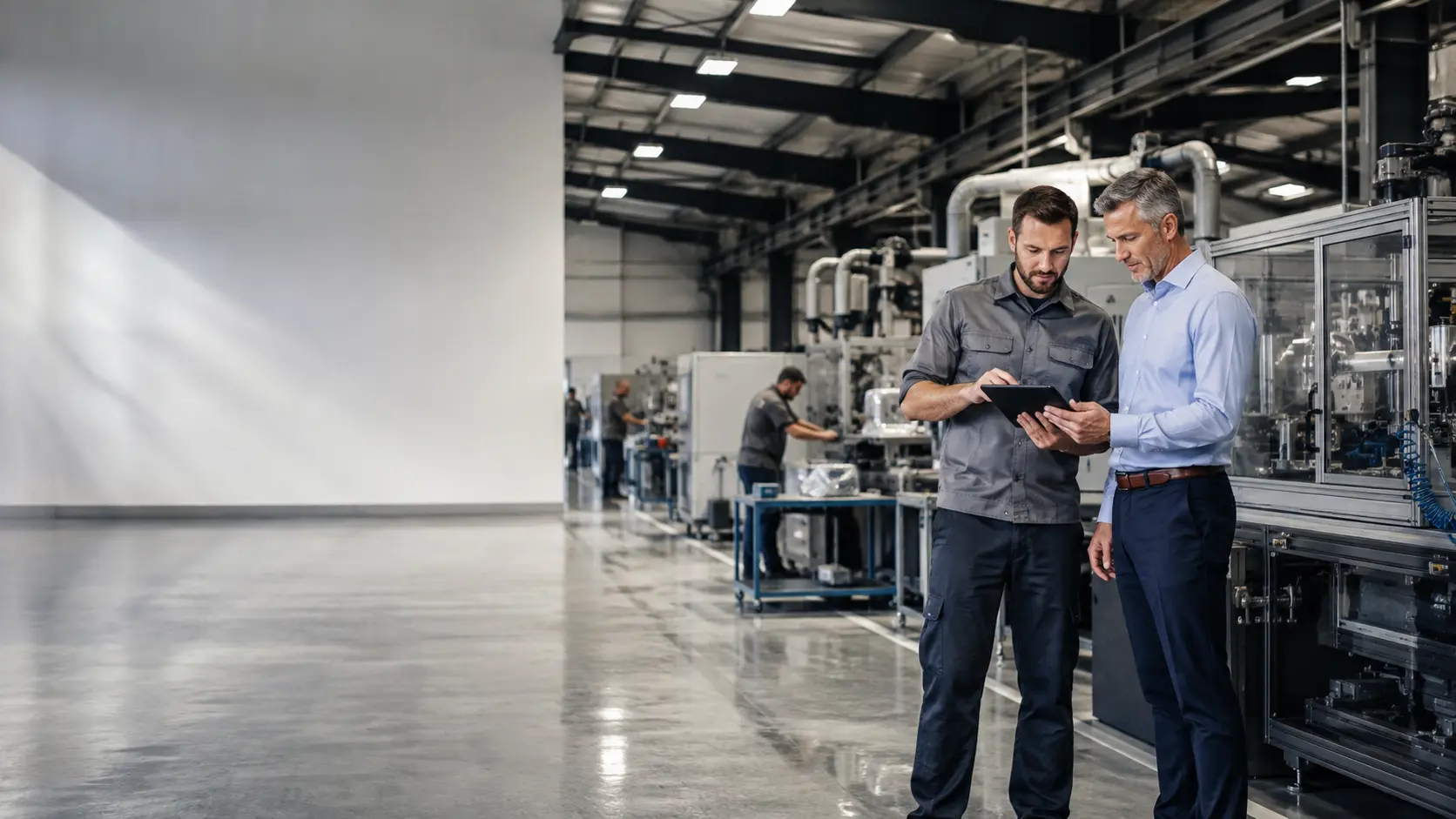
INDUSTRIAL FUNDING
Funding for machines, materials, and more output.
For manufacturers juggling new machines, raw materials, open purchase orders, and customers who take a long time to pay.
Illustrative cash cycle45–120 days
Example funding range$250K–$10M
Estimated funding time10–30 days
Cash-flow pressureProduction
Funding advisorDedicated
Industry patterns and funding ranges are illustrative examples. Funding timing depends on the product and your paperwork.
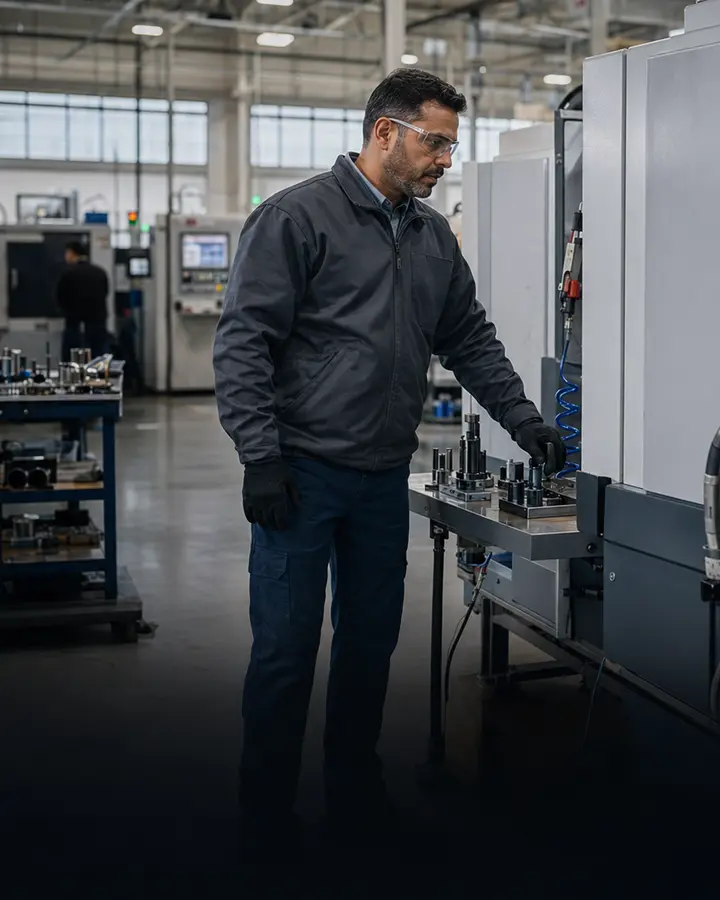
THE MONEY TIMING PROBLEM
Where the cash gets tight in manufacturing.
A healthy business can still run short. Money goes out before it comes in. Which of these hits you decides which type of funding you need.
Equipment capacity can limit contracted growth
Inventory can be valuable but difficult to liquidate
Customer concentration affects borrowing capacity
The right funding fixes this without leaving you with a payment you can't make, or a loan that outlasts the problem.
WHY TALK TO US
Funding should fix the problem,
not just move it to next quarter.
Tell your advisor what's actually going wrong. They'll work out which type of funding solves it, then bring you offers from the lenders that fit.

Free consultation
Talk through your goals and explore funding options with a dedicated advisor.
Book a free consultationAsk for what you actually need
Work out the money you need now, and the cushion you want on top. Borrowing a round number you didn't check is how people get in trouble.
Match the payment to when money comes in
Daily, weekly, or monthly? Look at your slowest month, not your average one. Can you make the payment then?
Compare what you pay back in total
APRs, factor rates (the number your funded amount is multiplied by to get your total payback), flat fees, closing costs - we turn all of it into one number: total dollars.
Keep enough cash to run on
Don't spend the cushion. You still have to cover payroll and bills while the new money starts earning.
WHAT THE MONEY IS FOR
What manufacturing businesses usually borrow for.
Some of these pay off in weeks, some in years. The loan should last about as long as the payoff takes.
What you needWhen it comes upWhere to startWhat decides it
01Machinery and production equipmentWhen you need to buy, replace, or add equipmentEquipment FinancingPayment should match when cash arrives
02Raw-material purchasingWhen you win work that costs money before it paysAsset-Based LendingKeep cash on hand
03Purchase-order fulfillmentWhen you win work that costs money before it paysInvoice FactoringPayment should match when cash arrives
04Capacity expansionWhen growing costs money before it makes moneyEquipment FinancingKeep cash on hand
05Receivables bridgeWhen you win work that costs money before it paysAsset-Based LendingPayment should match when cash arrives
06Automation and roboticsWhen you win work that costs money before it paysInvoice FactoringKeep cash on hand
07Facility improvementWhen you win work that costs money before it paysEquipment FinancingPayment should match when cash arrives
08Workforce hiring and trainingWhen you win work that costs money before it paysAsset-Based LendingKeep cash on hand
09Business acquisitionWhen you're buying a business, a location, or a partner outInvoice FactoringPayment should match when cash arrives
10Debt refinancingWhen you win work that costs money before it paysEquipment FinancingKeep cash on hand
ROUGH PRICING
What this type of funding usually costs.
These are wide example ranges to learn from - not offers, and not promises. What you're actually quoted depends on your credit, your sales, your collateral, the length of the loan, your paperwork, and the lender.
Funding typeRough costHow it's structuredHow much
Equipment FinancingApprox. 5%–30% APRFixed loan or lease secured by equipment$25K–$10M
Asset-Based LendingBase rate + approx. 2%–8%Revolving borrowing base plus facility fees$250K–$30M
Invoice FactoringApprox. 1%–5% per 30 daysDiscount fee against eligible invoices$50K–$20M
APR, factor rate, discount fee and total repayment are four different things - you cannot compare them side by side as if they were the same number. Compare these instead: total dollars paid back, how often you pay, how long it runs, the fees, what you put up as collateral, what you personally guarantee, and what happens if you pay it off early.
WHAT LENDERS CHECK
What decides your offer.
We tell the whole story of how your business runs - including the things that matter in manufacturing and never fit in a standard application form.
What your machines are worth
This affects what you can get, how much, at what price, and what payments you can safely handle.
How much of your inventory a lender will count as security
This affects what you can get, how much, at what price, and what payments you can safely handle.
How much of your revenue comes from one customer
This affects what you can get, how much, at what price, and what payments you can safely handle.
Whether what you keep on each order holds steady
This affects what you can get, how much, at what price, and what payments you can safely handle.
NOT SURE WHICH TO PICK?
Talk to an advisor before you sign anything.
We'll walk you through what it really costs, how often you pay, how long it runs, what you're putting up, what you're personally on the hook for - and whether your manufacturing business can actually carry it.
Talk to an advisorUSUALLY A GOOD FIT
Funding types that suit manufacturing.
These are starting points, not recommendations. What actually fits depends on your whole business and what you're spending the money on.
COMMON QUESTIONS
Questions about funding a manufacturing business.
Which product is usually best for this industry?
The starting shortlist is Equipment Financing, Asset-Based Lending, Invoice Factoring. The right choice depends on the use of funds, cash-flow timing, available collateral, credit, and documentation.
How much can a manufacturing business qualify for?
Qualification is usually tied to revenue, cash flow, time in business, existing debt, credit profile, and the use of funds. Asset-backed projects may also be limited by collateral value.
How quickly can funding close?
Some working-capital products can close after bank statements and basic documentation are verified. Bank, SBA, acquisition, and real-estate transactions generally require more underwriting and take longer.
Can financing be used for machinery and production equipment?
Potentially. The provider will evaluate the use of funds, repayment capacity, project economics, documentation, and whether the requested structure is appropriate for the asset or operating need.
Can equipment or productive assets be financed separately?
Often, yes. Asset-specific financing may preserve cash and align repayment with the useful life and expected return of the equipment or vehicle.
What rates should a business expect?
Pricing varies widely by structure. Bank and SBA products typically price from a benchmark plus a spread; equipment financing uses APR or lease pricing; factoring uses a periodic discount fee; faster working-capital products may use a fixed fee or factor rate.
What documents are usually required?
Expect recent bank statements, ownership information, existing debt details, and-depending on size-tax returns, P&L, balance sheet, receivables, inventory, contracts, or equipment invoices.
Does exploring options affect business credit?
The intake and provider disclosures should state when a soft or hard credit inquiry may occur. Product and provider requirements vary.
YOUR NEXT MOVE
Find the right capital for your manufacturing business.
One application. Every option that fits. A clear path to the money.
Get funded