
How to build a stronger business credit profile
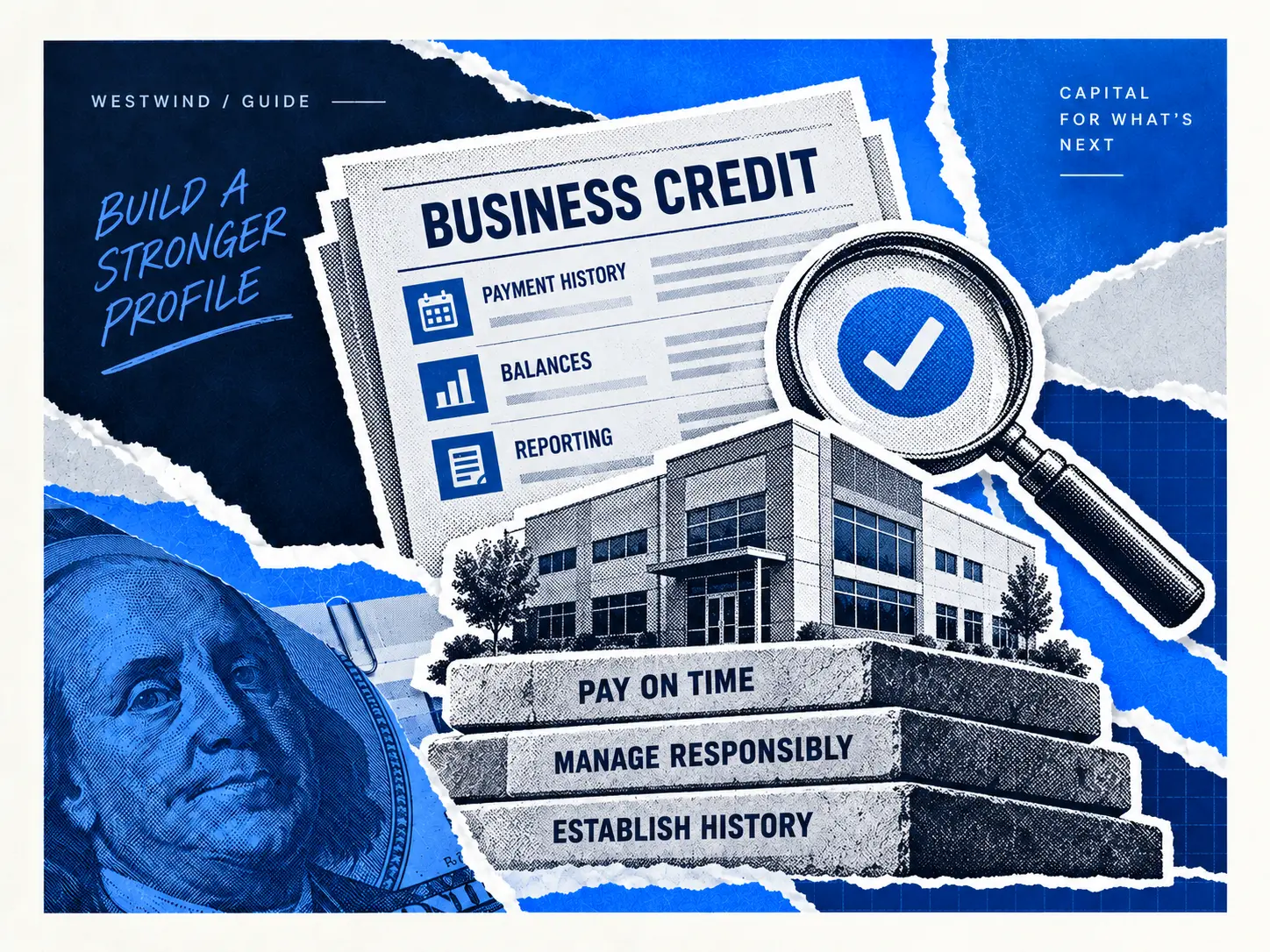
Build a stronger business credit profile through accurate records, reported payment history, sensible borrowing, and regular checks for errors or fraud.
The short answer
A stronger business credit profile comes from accurate company information, a documented record of meeting obligations, and responsible use of available credit. Start by checking the reports that exist, correcting errors, and confirming whether your creditors report payments. Registering a company or obtaining an EIN identifies the business, but does not by itself create a strong payment history.
Key takeaways
- Accurate company records and reported payment history support a stronger credit profile.
- Check whether creditors report activity and correct errors with supporting evidence.
- Manage balances alongside cash flow; no score guarantees approval or removes every guarantee.
The business context
Credit is one part of funding readiness. Lenders may also review cash flow, financial statements, industry, operating history, security, and owner credit. A higher score cannot make an unaffordable payment safe for the business.
Understand what a business credit profile contains
Business credit reports can include identifying information, reported payment experience, collections, public records, and other data. Experian's report description includes business background, trade and collection history, legal filings, and credit risk information.[3]
A profile and a score are related but different. The profile contains information; the score applies a particular model to some of that information. Bureaus and models use different methods, so one number does not represent every lender's view.
Experian explains that its scoring considers payment behavior, outstanding balances and utilization, public records, and business characteristics. Do not assume a consumer credit rule, such as one utilization percentage, maps perfectly onto every business score.[2]
Check the company details first
Confirm the legal name, trading name, address, entity status, industry description, and other identifying records. Make sure lenders, suppliers, and reporting agencies can connect legitimate accounts to the correct business.
Look for duplicate files or information belonging to a similarly named company. If an address or ownership record is wrong, correct it through the relevant source and bureau process. Keep evidence of the request and follow up until the record reflects the supported facts.
Use a separate business bank account and maintain clear bookkeeping. This makes transactions easier to reconcile and supports underwriting, even where the account itself does not contribute a reported credit tradeline.
Build payment history that is actually reported
Ask existing suppliers and creditors whether they report business payment activity, to which agencies, and how often. Experian's business credit guidance emphasizes working with reporting creditors and paying obligations on time.[1]
For example, a supplier offering 30 day terms may be operationally useful, but prompt payment will not automatically appear in every bureau file. Reporting coverage differs. Confirm it rather than assuming every invoice improves a score.
Choose accounts the business genuinely needs. Purchasing unnecessary products or taking expensive debt purely to create tradelines can damage cash flow. The purpose is to document sustainable operating behavior, not manufacture the appearance of a larger business.
Protect the payment process
Set reminders before due dates, reconcile statements, and assign responsibility for payment approval. If automatic payments are used, maintain enough cash in the paying account and review the transaction afterward.
A growing company can miss a payment because an invoice went to a former employee or an approval stalled. Fixing that workflow can matter more than adding another credit account. Track disputed invoices separately so a commercial disagreement does not become an overlooked deadline.
Where cash is temporarily tight, discuss terms with the creditor before a due date where possible. Get any agreed modification in writing and ask how the account will be reported. Do not assume that a verbal extension changes reporting or contractual obligations.
Manage balances with the whole business in view
Monitor utilization on revolving facilities, total payment commitments, and available liquidity. A large unused limit can provide flexibility, but a provider may reduce availability under the contract. Do not count every credit limit as guaranteed emergency cash.
Suppose a business has a $50,000 revolving line and owes $40,000. Its simple balance to limit ratio is 80%. Paying $15,000 reduces that ratio to 50%, but only makes commercial sense if the payment leaves enough cash for payroll, taxes, and operations. The example is arithmetic, not a scoring target or a promised score improvement.
Use a cash flow forecast to plan balance reductions without creating a new shortage. If obligations are already too heavy, evaluate the operating problem before seeking more accounts.
Review errors and unfamiliar activity promptly
Check for inaccurate late payments, balances, duplicate accounts, and unfamiliar credit activity. Gather statements, payment confirmations, settlement documents, or identity records that support a correction request.
Follow the reporting agency's and creditor's dispute processes and keep a record of what you submitted. An error should be corrected based on evidence. A legitimate negative item does not become inaccurate because it makes borrowing harder.
Treat unfamiliar accounts as a possible identity or reporting issue and investigate promptly. Use independently verified contact details for the creditor. Do not send sensitive information to an unsolicited credit repair contact simply because it claims to represent a bureau.
Prepare for lenders that also assess owner credit
Separate business records do not mean every lender ignores personal credit. Depending on the product and consent requirements, the provider may review owners, guarantees, and other financial relationships.
Ask what checks occur and whether they affect personal credit reporting. Read personal guarantees in business financing to distinguish credit review from the separate act of promising repayment. A personal guarantee and a business credit score are not substitutes for one another.
If a lender declines the application, ask what factor drove the decision. Bank of America recommends understanding the reason and addressing issues within your control before reapplying. A cash flow problem may require a different response from an inaccurate bureau record.[4]
A practical improvement sequence
Start by checking company information and obtaining relevant reports. Next, correct supported errors and put payment controls in place. Then confirm reporting with useful existing creditors and monitor balances alongside the operating forecast.
Keep a simple log of actions and follow up after reporting cycles. Do not attach a guaranteed score increase or deadline to the plan. Your starting history, creditor reporting, bureau processing, and scoring model affect the outcome.
The business funding preparation guide connects these improvements to the rest of an application. Current accounts and a credible repayment plan remain essential.
Common questions about business credit
How quickly can I build business credit?
There is no reliable universal timeline. New reported activity and corrections take time to appear, and models assess different information. Sustainable payment history matters more than a promise of instant creditworthiness.
Does checking my own business report hurt the score?
Reviewing your own report is generally a monitoring action, not the same as applying for new borrowing. Confirm the bureau's terms and the lender's inquiry process separately, especially if personal credit may also be checked.
Will strong business credit remove a personal guarantee?
Not necessarily. Guarantee requirements depend on the product, lender, ownership, and underwriting. Strong credit can support an application without changing a contractual or program requirement.
Build a profile that supports the real business
A Westwind funding advisor can help discuss how credit information fits with cash flow and the financing request. Bring relevant reports, current financials, and any prior lender feedback so the next step addresses the actual issue.
Sources and review
This guide addresses US business financing. Definitions and program details draw on the cited sources. Worked examples are hypothetical teaching illustrations, not customer case studies or financing offers.
- How to build business credit
ExperianAccessed
Credit-bureau guidance on company records, reporting creditors, and payment history.
- How to check your business credit score
ExperianAccessed
Credit-bureau guidance on business scores and the information used in scoring.
- What is in your business credit report
ExperianAccessed
A credit bureau’s description of the information in its business reports.
- What to do if a business loan is not approved
Bank of AmericaAccessed
A lender’s guidance on understanding and addressing a declined financing application.
Review notes and methodology
Assumptions
- Worked examples use US dollars and the assumptions stated beside each calculation.
- Example amounts, fees, and payment schedules are illustrative inputs, not quoted market terms.
Limits of the evidence
- Eligibility, pricing, and obligations vary by provider, product, jurisdiction, and agreement.
- Program rules can change. Confirm current requirements for the proposed transaction.
The site owner requested deployment of this complete guide on October 9, 2026. Source references, calculations, and internal links were checked during preparation. A named financial reviewer has not yet been recorded.
Westwind Capital is a financing intermediary. Providers determine eligibility, approval, pricing, and final terms.
Educational information, not individualized financial, legal, tax or accounting advice. Examples are not financing offers. Any actual terms and availability depend on the provider’s review and the relevant agreements.